
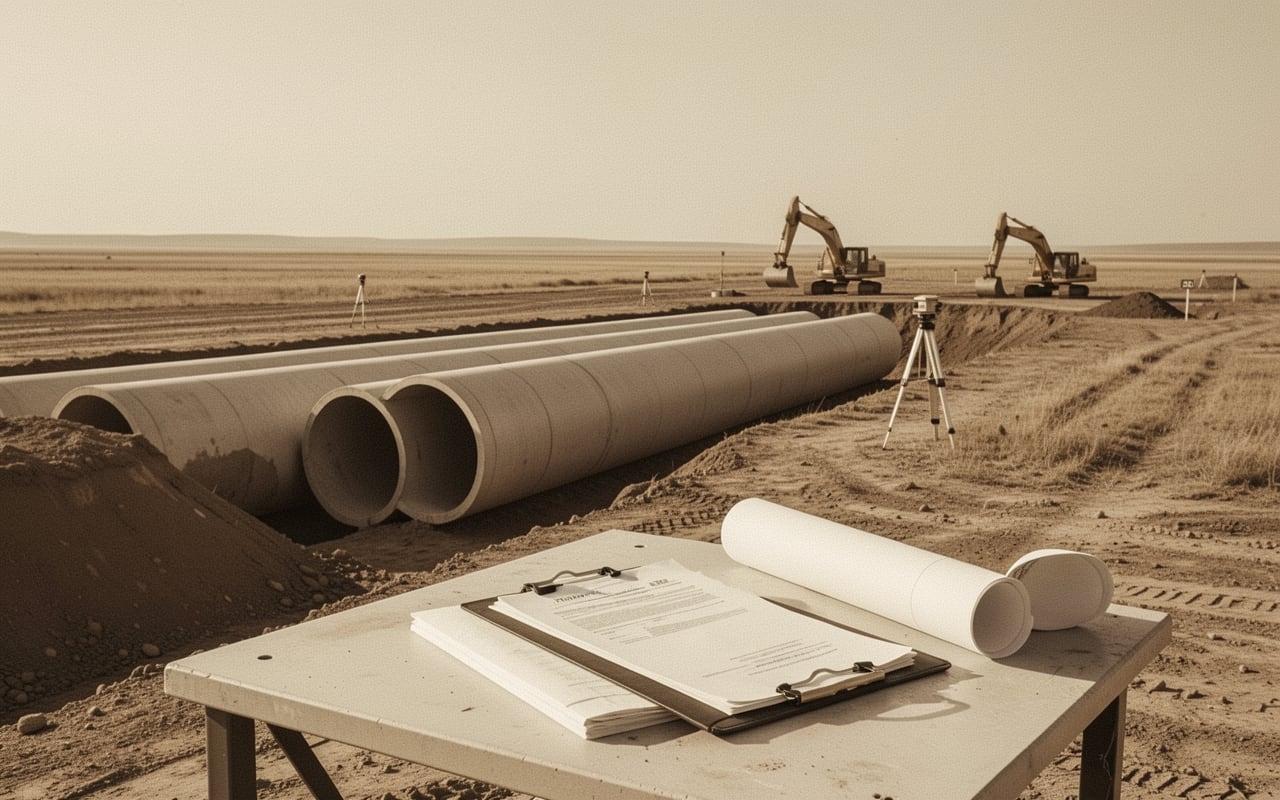
IFI Tenders in Uzbekistan and Central Asia: November 2026 Overview
What IFIs announced and awarded in late October–early November 2026 for Uzbekistan and Central Asia: procurement numbers, scope, notification dates. We examine the FIDIC forms typically underlying these contracts and what bidders must verify in the contractual conditions before submitting a bid.
 Larissa Belousova
The World Bank procurement notices sampled between 26 October and 3 November 2026 for Central Asia include three invitations to bid for construction works: rehabilitation of the Beshkent hydro unit and reconstruction of the Sebiston–Dangara water pipeline under project SWIM 2 in Tajikistan, and the Isanova 220 kV substation under project KRED in Kyrgyzstan. For Uzbekistan, the period produced one contract award notice for the sewerage network in Nukus — the Water Services and Institutional Support Project (P162263).
Below are the facts from the notices: country, project, subject, notice type and reference. And separately the issue that causes participants to lose money most often after winning: the contractual part of the tender documents, which tends to be read last.
In brief: For Central Asia in the World Bank procurement notices sampled between 26 October and 3 November 2026, three open invitations to bid: two under project SWIM 2 in Tajikistan and the Isanova substation in Kyrgyzstan. For Uzbekistan — award of contract KSP-W-ICB-06 for sewerage in Nukus. Verify all submission deadlines and contractual timelines against the tender documents: Particular Conditions override General Conditions.
IFI procurement announced: November 2026 notices overview
This selection draws on World Bank procurement notices for four countries in the region for the period 26 October to 3 November 2026. For each participant, three fields in every notice are critical: project code, procurement reference and notice type — these are used to locate tender documentation and track amendments.
| Project | Procurement subject | Submission deadline / status |
|---|---|---|
| SWIM 2, Tajikistan (P515852), SWIM 2-CW-NCB-01 | Rehabilitation of the Beshkent hydro unit, Shakhrituz district | Invitation from 01.11.2026; see tender documents for submission deadline |
| SWIM 2, Tajikistan (P515852), SWIM2-CW-NCB-02 | Reconstruction of the Sebiston–Dangara water pipeline, 17.6 km, Khatlon region | Invitation from 01.11.2026; see tender documents for submission deadline |
| KRED, Phase 1, Kyrgyzstan (P178286), KG/KRED/W/2023/RFB-04 | Design, supply and installation of the Isanova 220/110/10 kV substation and expansion of associated substations | Invitation issued 27.10.2026; two envelopes, no prequalification |
| Water Services and Institutional Support, Uzbekistan (P162263), KSP-W-ICB-06 | Construction and reconstruction of sewerage network and pumping station in central Nukus | Awarded; award notice dated 10.09.2026 |
| Enhancing Resilience in Kyrgyzstan (P162635), KG-CW/RFB-26/AF-2026-1 | Reconstruction of school No. 10 named after A.P. Gaidar, city of Kyzyl-Kiya, Batken region | Awarded; award notice dated 22.09.2026 |
| Sustainable Financing for Rogun Hydropower, Tajikistan (P181029), SFRHPP/CW/RFB/DC/01 | Lot 1 — electromechanical equipment | Awarded via Direct Selection procedure |
On where the foundation for future claims is laid in IFI projects, Larissa Belousova wrote in her channel:
«My experience (15+ years in infrastructure projects) shows that it is precisely at the stage of structuring such programmes that the basis for subsequent claims and disputes — or their absence — is formed.»
World Bank tenders for Uzbekistan: what has been published
For Uzbekistan in this selection, there is one notice — the award of contract KSP-W-ICB-06 for construction and reconstruction of a sewerage network and sewerage pumping station in central Nukus. The procurement was conducted under the Water Services and Institutional Support Project (P162263), financed by IDA-65540 and IDA-65550, using the Request for Bids method.
The award notice was issued on 10 September 2026; the contract term stated in the notice is 540 days, and the contractor is HUNAN AEROSPACE KAITIAN WATER SERVICES CO., LTD (China). All remaining packages for this project should be searched using code P162263: all lots for a single project are published under the same code and distinguished only by procurement reference.
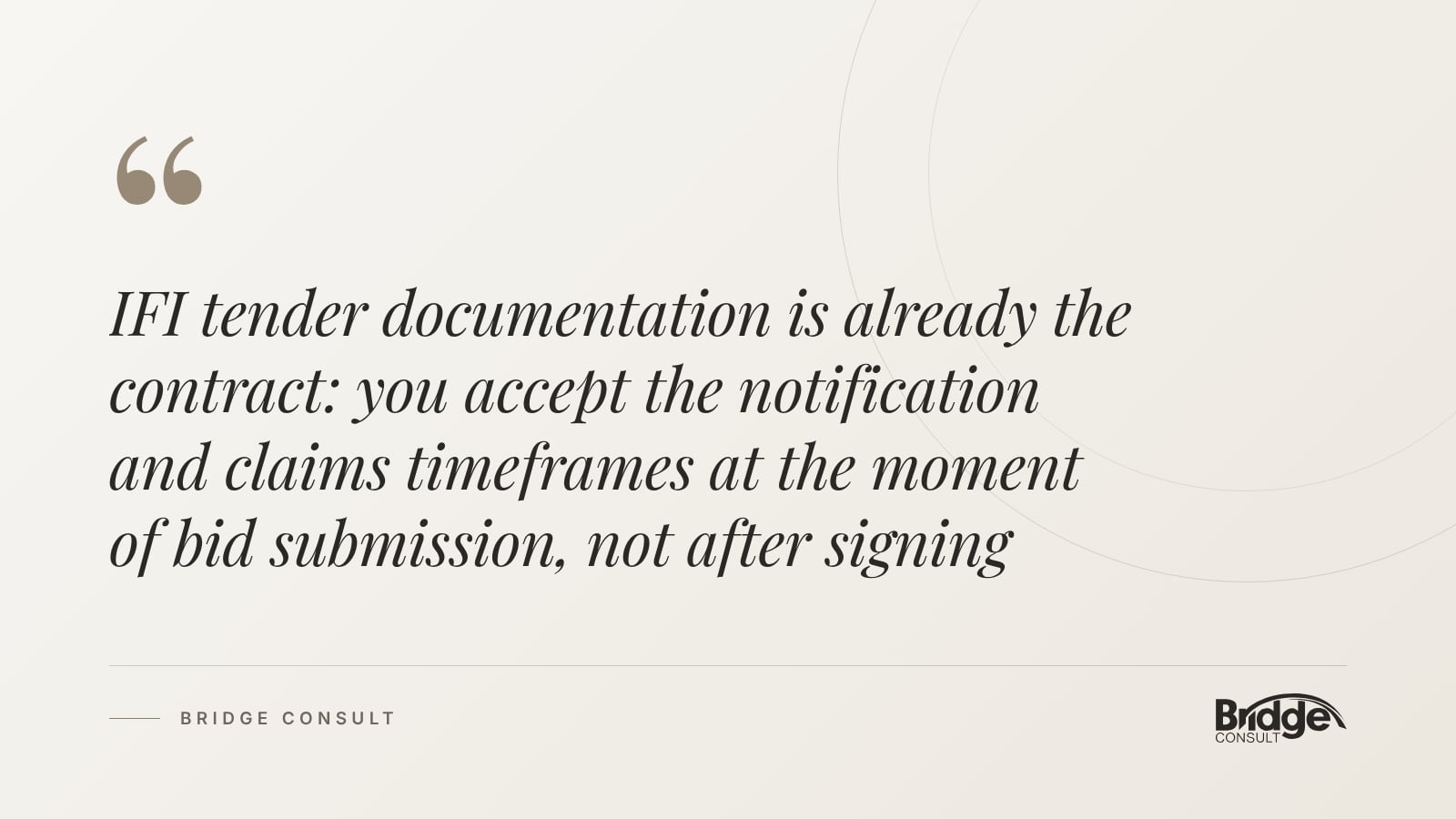
The duration in the notice and Time for Completion in the contract data are not the same thing. In such projects, the completion period typically runs from the commencement date, not the award date, and any discrepancy between the figure in the notice and the contract terms must be resolved before bid submission, not after signing.
Open invitations to bid: Tajikistan and Kyrgyzstan
- Tajikistan, SWIM 2 (P515852), reference SWIM 2-CW-NCB-01: rehabilitation of the Beshkent hydro unit in Shakhrituz district (Khatlon region). Procedure — Request for Bids in a single envelope, grant E 7110-TJ, notice dated 1 November 2026.
- Tajikistan, SWIM 2 (P515852), reference SWIM2-CW-NCB-02: reconstruction of the Sebiston–Dangara water pipeline, 17.6 km, Khatlon region; same grant and same single-envelope procedure, notice dated 1 November 2026.
- Kyrgyzstan, Kyrgyz Renewable Energy Development, Phase 1 (P178286), reference KG/KRED/W/2023/RFB-04: design, supply, installation, testing and commissioning of the Isanova 220/110/10 kV substation; expansion of substations Karashoro, Karatai and Karakuldja 110/35/10 kV; associated transmission line and interface works. Employer — Ministry of Energy of the Kyrgyz Republic, financing 7370-KG / F 3790-G, procedure — two envelopes without prequalification, notice issued 27 October 2026. The package includes design and equipment supply, so the FIDIC form typically corresponds to the Yellow Book; the specific edition and clause numbering are verified in the tender documents (Contract Data and Particular Conditions).
The difference between single-envelope and two-envelope procedures is not a formality. In the two-envelope procedure, technical proposals are assessed first, and after admission to price opening, the contents of the technical proposals cannot be rewritten. For a “design, supply and installation” package, this means that design solutions, equipment lists and manufacturers must be locked before submission.
Which FIDIC contract forms typically underlie IFI procurements
International financial institutions’ standard tender documents for works are based on FIDIC. The logic of form selection is straightforward: employer designs and payment is by measurement — the conditions are built on the Red Book; contractor designs and supplies equipment — the Yellow Book.
Packages of the “design, supply and installation” type, as in the Isanova substation notice, in such projects typically proceed under Yellow Book conditions: the contractor is responsible for design (clause 5 of the 2017 Yellow Book) and for testing upon completion (clause 12). Works based on the employer’s completed design — water pipelines, sewerage networks, school reconstruction — are usually under Red Book conditions, with measurement and assessment under clause 12 of the 2017 Red Book. If it is unclear which form a package falls under, consult the indicators in the breakdown Red or Yellow FIDIC Book and re-read the General Conditions section in the tender documents.
The edition cannot be guessed. Historically, ADB and World Bank projects used the MDB Harmonised Edition based on the 1999 Red Book; IFIs are now transitioning to the 2017 edition with their own Particular Conditions. In the 1999 edition, article 13 ends at 13.8 (Price Adjustment); in the 2017 edition, it ends at 13.7 (Price Adjustment), because legislative changes have been moved to 13.6. Claim clause numbering also differs: in 1999, clause 20.1 (Notice — 28 days, particulars — 42 days, Engineer’s response — 42 days); in 2017, clause 20.2 with sub-clauses 20.2.1–20.2.6. The amicable settlement period after a tribunal decision: in 1999 — 56 days (20.5); in 2017 — 28 days (21.5). Comparison should be made only against the Contract Data and General Conditions of the specific contract.
What a participant must check in the contractual part before bid submission
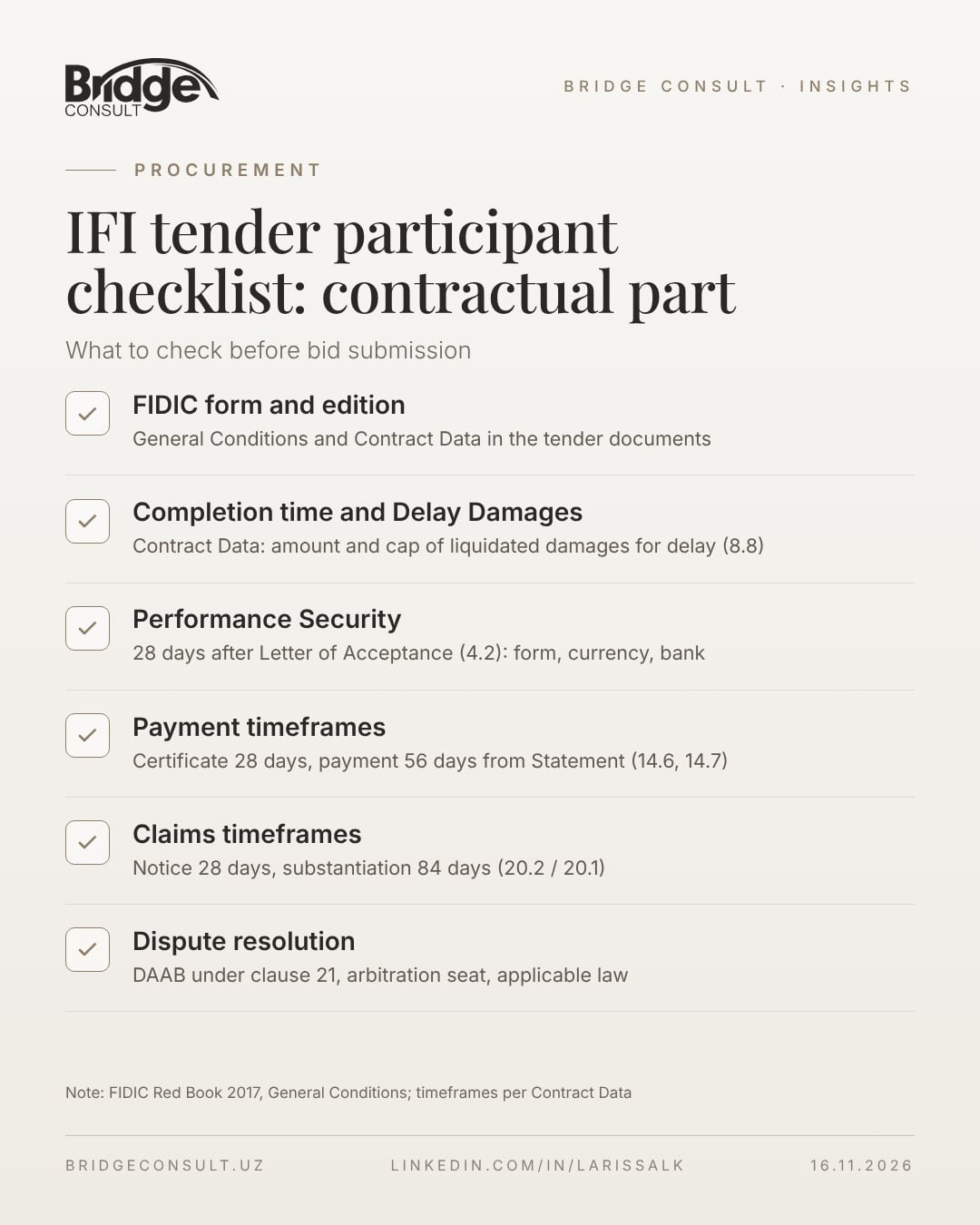
- Identify the form and edition. Locate the General Conditions and Contract Data in the tender documents and record the book and year — clause numbers and all timeframes depend on this.
- Extract timeframes and limits from Contract Data: Time for Completion, the amount and cap of Delay Damages (8.8), the defect notification period (per the General Conditions if not stated in Contract Data — one year).
- Check performance security: under the General Conditions, Performance Security must be provided within 28 days of receiving the Letter of Acceptance (4.2); the amount and currency are in Contract Data. Ensure your bank can issue the guarantee in this form, currency and within this timeframe.
- Calculate cash flow: advance payment (14.2), issuance of the interim payment certificate within 28 days of receiving the Statement (14.6), payment within 56 days (14.7), return of retention procedure (14.9). Particular Conditions often modify these timeframes — compare line by line.
- Read the claims mechanics: notice under 20.2.1 within 28 days, fully substantiated claim — 84 days, Engineer’s determination or agreement under 3.7 and notice of disagreement within 28 days. If Particular Conditions shorten these timeframes, this is a direct cost to your internal procedures. In the 1999 edition, equivalent provisions are in clause 20.1 with different intermediate deadlines.
- Examine dispute resolution: whether DAAB is provided under clause 21 of the 2017 edition or DAB under the 1999 edition, within what timeframes it is appointed and who bears the costs; what is specified as the seat of arbitration and applicable law.
Cross-check the contractual part with Uzbek law where applicable: acceptance procedures, liquidated damages and limitation periods under Uzbek law may restrict contract terms. Such discrepancies are cheaper to resolve by asking the employer before bidding than by claim after.
Timeframes that start the contract
Information for those who have already been awarded a contract. For participants at the bid preparation stage, these timeframes are part of the cash flow and risk schedule that must be built into the price.
- Provide the Performance Security in the form and within the timeframe specified in Contract Data (4.2).
- Prepare and submit the initial programme of works — within 28 days after the notice of commencement; the Engineer has 21 days for review (8.3).
- Initiate appointment of DAAB members under clause 21.1 within the timeframes provided in the contract.
- Apply for the advance payment and advance payment guarantee under 14.2, without waiting for the first Statement.
- Open the site diary and potential claims register, and set up the early warning procedure for risks (8.4).
All timeframes above are per the 2017 General Conditions, unless the Particular Conditions have modified them. If the team is entering an IFI project for the first time, it is prudent to review the contractual part and timeline register in advance — this underpins FIDIC contract support and contract manager training.
Common errors of IFI procurement participants
- Focus on price and volumes only, and read the Particular Conditions after signing the contract.
- Carry timeframes from the 1999 edition into a 2017 contract, or vice versa — and miss the claim notification deadline.
- Fail to check who performs the role of Engineer and what authorities are limited by the Contract Data (approval of variations, determinations under 3.7).
- Plan the bank guarantee and advance without a time buffer, while the 28 days for Performance Security are counted from receipt of the Letter of Acceptance.
- Do not establish a system of current records from day one: without a site diary, protocols and correspondence, there is nothing to substantiate a claim under clause 20.2.3 (2017 edition) / 20.3 (1999 edition).
- Submit questions on the documents after the clarification period has closed, when the response can no longer be issued as an amendment.
Frequently asked questions
Where to find World Bank tenders for Uzbekistan?
In the procurement section on projects.worldbank.org: each notice is linked to a project code and procurement reference — for example, P162263 and KSP-W-ICB-06 for the water project in Nukus. Search by project code, as all lots for one programme are published under it.
Were there new ADB tenders for Uzbekistan in November 2026?
This review does not include ADB notices — all entries relate to World Bank procurement. ADB notices are published on its own procurement portal, and participation decisions are made solely against the primary source.
How does Invitation for Bids differ from Contract Award?
Invitation for Bids is an invitation to submit bids; participation is still open. Contract Award is the award notice: the procedure is closed, and it states the contractor, price and contract term.
Which FIDIC form applies in international tenders for construction in Uzbekistan and the region?
IFI standard documents are based on FIDIC: works based on the employer’s design proceed under Red Book conditions; packages with design and equipment supply — Yellow Book. The MDB Harmonised Edition based on the 1999 edition was used historically; IFIs are now transitioning to the 2017 edition with their own Particular Conditions.
Can timeframes from the FIDIC General Conditions be relied upon when preparing a bid?
Only after cross-checking with Contract Data and Particular Conditions: they override the General Conditions, including timeframes for notifications, payments and securities. If a discrepancy affects price or schedule, raise it with the employer during the clarification period.
Sources and references
- World Bank. Uzbekistan · Contract Award · Construction and reconstruction of sewage network, sewage pumping station in Nukus Central
- World Bank. Tajikistan · Invitation for Bids · Reconstruction of the Sebiston-Dangara water pipeline 17.6 km in Khatlon region
- World Bank. Tajikistan · Invitation for Bids · Rehabilitation of Beshkent Hydro Unit in Shakhrituz district
- World Bank. Kyrgyz Republic · Invitation for Bids · Design, supply and installation of Isanova substation 220 kV
- World Bank. Kyrgyz Republic · Contract Award · Reconstruction of school No. 10 named after A.P. Gaidar
- World Bank. Kyrgyz Republic · Contract Award · Reconstruction of school No. 2 named after A. Osmonbekov
- World Bank. Tajikistan · Contract Award · Lot 1 – Electromechanical Equipment (Rogun Hydropower)
- FIDIC Red Book 2017, General Conditions, Clauses 4, 8, 14, 20, 21
How Bridge Consult can help
Bridge Consult supports employers and contractors on FIDIC contracts — from reviewing conditions and notices to claims, DAAB proceedings and arbitration. Founder Larissa Belousova is a FIDIC Certified Consulting Engineer and an ADB Accredited Contract Management and Dispute Avoidance Specialist.
Have a question about a live contract? Contact us and we will look at your situation.
Read next
FIDIC Uzbekistan
Expert materials, case studies and event announcements on FIDIC contracts in Central Asia — before they reach the site.