

EOT: How a Contractor Can Lawfully Extend Time and Avoid Delay Damages
An Extension of Time is the contractor's main shield when delays are not its fault. We break down which events give a right to EOT under FIDIC, why a claim expires after 28 days, and which records decide the outcome of a dispute.
Missing the Time for Completion is the contractor’s most expensive risk: behind it stand delay damages, deductions under guarantees and a damaged reputation. Yet far from every delay is the builder’s fault. For exactly these situations the FIDIC forms provide the EOT (Extension of Time) — an extension of the Time for Completion that relieves the contractor of liability for delay damages.
Which events give a right to an EOT
Sub-Clause 8.5 of the FIDIC 2017 conditions and the provisions linked to it list the typical grounds:
- Variations — the employer has expanded or changed the scope of works;
- Employer-caused delays: late access to the site, late drawings or permits;
- Unforeseeable physical conditions (Sub-Clause 4.12) — for example, ground conditions absent from the site data;
- Exceptional Events (the former force majeure);
- acts of authorities, delayed inspections and tests not attributable to the contractor.
Important: the right to an EOT does not arise automatically. It must be claimed and proven.
The 28-day rule: why claims expire
Under Sub-Clause 20.2.1 of FIDIC 2017 the contractor must give a Notice of Claim within 28 days of when it became aware, or should have become aware, of the event. Miss the deadline — and the right to time and money is lost, however well-founded the claim may be on the merits. This is the most frequent and the most expensive mistake contractors make on FIDIC projects.
The procedure then requires a fully detailed claim within 84 days: a description of the event, the contractual basis, and a calculation of the delay and additional cost.
What decides the outcome: records and the programme
An EOT is won with documents, not emotions:
- An up-to-date works programme (Sub-Clause 8.3) — without an approved programme it is impossible to show how the event affected the critical path.
- Contemporary records: site diaries, correspondence, photo records, weather data, timesheets.
- Causation: delay analysis methods under the SCL Protocol (Time Impact Analysis, Windows Analysis) show which delay actually moved the completion date — critical where there is concurrent delay, when both parties are at fault.
Frequent mistakes
- Notifying “once the scale of the problem is clear” — instead of 28 days from the event.
- A claim with no reference to a specific clause of the contract.
- A calculation of “we were delayed 60 days, give us 60 days” without critical-path analysis.
- No records: a year after the event the picture is almost impossible to reconstruct.
How Bridge Consult can help
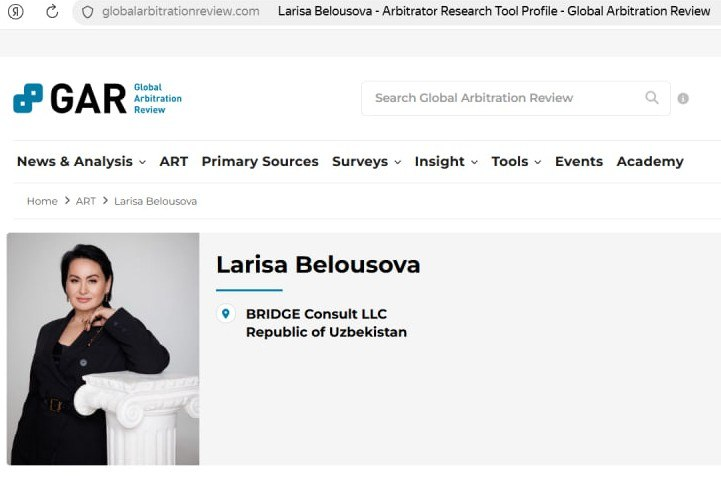
Bridge Consult supports claims management on FIDIC projects: from setting up notice and record-keeping systems to preparing EOT claims and defending the position before the Engineer, the DAAB and in arbitration. Our expert performs Forensic Delay Analysis to the international SCL Protocol methodologies — including retrospective analysis of delays that have already occurred.
Received a delay damages notice, or feel the project slipping? Contact us — the earlier claims work starts, the higher the chances of an EOT.
Read next

FIDIC Uzbekistan
Expert materials, case studies and event announcements on FIDIC contracts in Central Asia — before they reach the site.